Reading the Undertone: Shade Matching for Every Skin Tone
Undertone, not skin depth, decides whether a shade flatters a hand. Read warm, cool, or neutral with the vein check, the jewellery question, and the white-...

Summary: Undertone, not skin depth, decides whether a shade flatters a hand. Read warm, cool, or neutral with the vein check, the jewellery question, and the white-versus-cream test, then match nudes, French, reds, and pastels to the family you read.
Shade matching works when you match to the client's undertone rather than to the colour in the bottle. Two clients ask for nude. One walks out with a set that reads clean and expensive. The other walks out with a hand that looks washed out and greyish. Same bottle, different outcome, and the difference is undertone.
Reading it is a service skill you can build, not a lucky guess you make at the wheel. So let me show you how I read a hand.
What Undertone Actually Is
Surface tone is what tans and fades with the seasons. Undertone is the constant beneath it, and it does not shift. You are working with three broad families.
- Warm. Gold, peach, or yellow beneath the skin. Veins at the wrist tend to read green.
- Cool. Pink, red, or blue beneath the skin. Veins read blue or purple.
- Neutral. A balance of both, or a tone that shifts depending on light. Veins are hard to call either way.
Now hear the part that trips up most technicians I teach. Depth and undertone are separate axes. A deep hand can be cool, a fair hand can be warm, and assuming depth predicts undertone is how techs end up matching to the wrong family entirely. So read them independently.
Reading the Hand in Front of You
Do this at the start of the service, in the same light you polish in. Daylight is honest. Warm salon bulbs will lie to you, so calibrate to your own bench before you trust any read.
The Vein Check
Turn the wrist to the light. Green over the veins leans warm, blue or purple leans cool, and a mix you cannot decide leans neutral. It is a starting read, not a verdict.
The Jewellery Question
Ask which metal your client feels best in. Gold flattering to the skin usually signals warm, silver signals cool, and someone who wears both comfortably is often neutral. Clients know their own hands better than any chart, so let them tell you.
The White-Versus-Cream Test
Hold a pure white swatch and a soft cream swatch against the nail bed. On warm skin the pure white can look harsh and the cream sits naturally. On cool skin the pure white looks crisp and the cream reads dingy. This one test settles most nude and French decisions on the spot, and it is the one I reach for when the vein check is ambiguous.
Choosing the Shade, Not Just the Colour
Once you know the family, the selection gets faster and your redos drop.
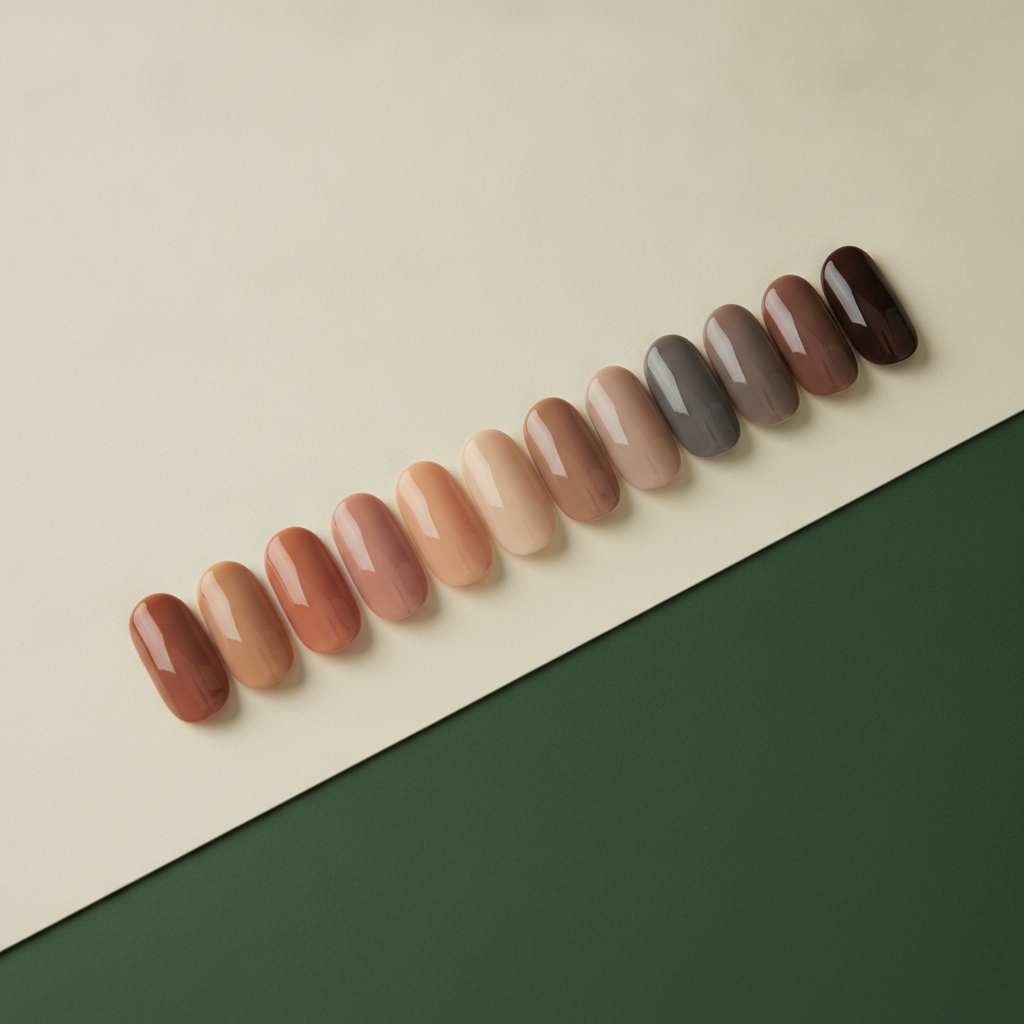
- Nudes and beiges. Match the nude to the undertone, not the skin depth. Warm skin takes peach and caramel nudes, cool skin takes rosy and mauve nudes, and neutral skin has the widest run of the drawer.
- French and structure work. Pure bright white for cool undertones, a warmer or softer white for warm undertones, so the smile line frames the hand instead of fighting it.
- Reds. Blue-based reds sing on cool skin, orange and brick reds on warm skin. A true red reads differently on every hand, which is exactly why one red is never enough in a professional kit.
- Brights and pastels. Watch the ashy trap. A pastel that looks fresh on cool skin can go grey on warm skin, so lean into the warmth of the shade to keep it luminous.
When you are genuinely between two shades, the neutral choice is usually the safer service call. Then adjust on the next visit with your notes in hand.
Build a Working Record
Note the undertone read and the exact shade in the client file. You are not re-solving the same puzzle every six weeks, and a client who never gets a bad nude comes back. That is the quiet economics of getting the read right, and it is why I make record-keeping part of the technique and not an afterthought.
Colour for Every Hand Is a Formulation Decision
Colour built for every skin tone is not a marketing line to me. It is a formulation decision.
A shade range only serves your chair if it carries the warm nudes, the cool nudes, the blue reds and the brick reds, and enough depth across the run that no client is left with a colour that nearly works. That is what inclusive by design means at the bench. The drawer holds the answer for the hand in front of you, in stock, when you need it.
Frequently asked questions
What is skin undertone and how is it different from skin tone?
Surface tone is what tans and fades with the seasons. Undertone is the constant beneath it and it does not shift. The three broad families are warm (gold, peach, or yellow, with veins reading green), cool (pink, red, or blue, with veins reading blue or purple), and neutral (a balance of both).
Does darker skin always mean a warm undertone?
No. Depth and undertone are separate axes. A deep hand can be cool and a fair hand can be warm. Assuming depth predicts undertone is how technicians end up matching to the wrong family entirely, so read them independently.
How do I test a client's undertone at the table?
Use three checks in the light you polish in. Turn the wrist for the vein check, ask which metal she feels best in (gold suggests warm, silver suggests cool, both suggests neutral), then hold a pure white swatch and a soft cream swatch against the nail bed. On warm skin the cream sits naturally, on cool skin the pure white looks crisp.
How do I choose the right nude?
Match the nude to the undertone, not the skin depth. Warm skin takes peach and caramel nudes, cool skin takes rosy and mauve nudes, and neutral skin has the widest run of the drawer. If you are genuinely between two shades, the neutral choice is usually the safer service call.
Which red suits which undertone?
Blue-based reds sing on cool skin, and orange and brick reds suit warm skin. A true red reads differently on every hand, which is exactly why one red is never enough in a professional kit.
LNC Professional supplies complete, safe-chemistry systems for professional nail technicians. Designed in the Caribbean, built for the world. See the range at lncpronails.com.
Have a question about a system, or want the safety data sheet for a specific product? Message us on WhatsApp at +1 (562) 548-7272. We answer.
Related reading
- Acrylic vs Gel vs Dip vs Poly: Which System to Use
- Can You Mix Nail Brands?
- How to Cure Gel Nails Properly
Authoritative sources
- Nail Care Products. US Food and Drug Administration.
- Manicurists and Nail Technicians: workplace exposures. NIOSH, US Centers for Disease Control and Prevention.