Mixing Nail Brands: Why It Fails and What to Do Instead
Mixing nail brands causes lifting, breakage, and unpredictable curing because products are not made to layer together. Run one system from prep to top coat for steady results.

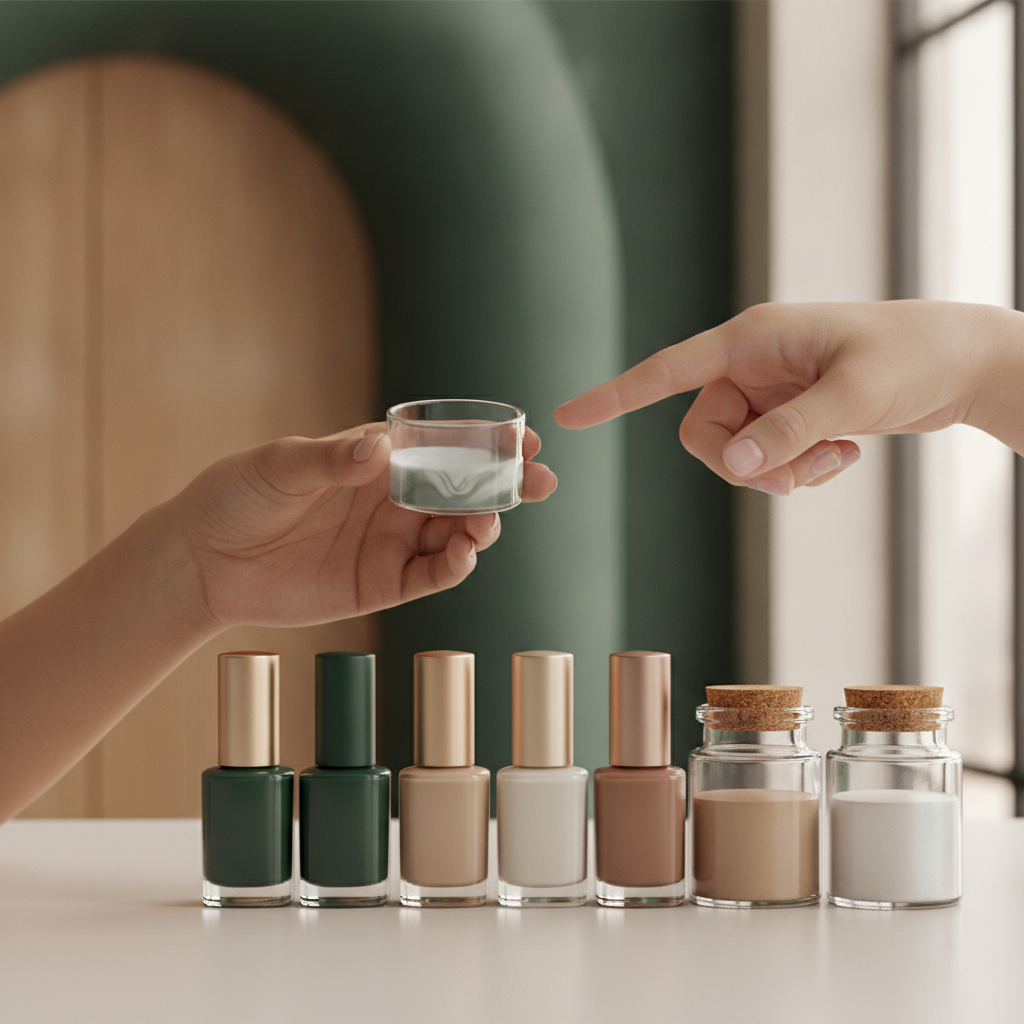
Summary: Mixing nail brands causes lifting, breakage, and unpredictable curing, because products are not built to layer together. Run one complete system from prep to top coat. Then your results become steady and repeatable.
Mixing nail brands is one of the most common causes of failed sets, and it is avoidable. I have seen it in almost every classroom I have taught. Techs combine products to solve a problem or use up stock, and the intention is good. However, different brands are not made to work together. Their chemistry, cure, and adhesion differ. So the layers bond unpredictably, and retention drops. Combining product lines is a gamble, not a fix.
The cost lands on you. When a mixed set lifts or cracks, the client blames the technician, not the shelf. Because of that, a mismatch is a lost booking and sometimes a lost referral. That is why one system beats a mixed kit every time.
Why Mixing Nail Brands Causes Failures
Mixing nail brands fails because each product is engineered as part of a matched system. A base is tuned to its own builder. A builder is tuned to its own top coat. Therefore, when you swap one layer for another brand, the chemistry no longer lines up.
Three problems follow, and I want you to know all three.
- Unpredictable curing. Gels use different photoinitiators. So one brand's gel may not fully cure under a lamp tuned for another. Under-cured layers stay soft inside.
- Weak adhesion. Bases and builders are matched for bonding. Combine two brands, and the bond becomes a guess. Then lifting starts at the sidewall or cuticle.
- Inconsistent strength. Layered products flex and harden at different rates. That stress leads to cracks and free-edge breaks.
Combining product lines removes the one thing you want at the bench: predictable, repeatable results.
What Mixing Looks Like at the Bench
Blended kits fail in patterns you can read, and once you know them you will not miss them.
- Early peeling. A base from one brand under a builder from another often lifts within days.
- Cloudy or tacky gel. A cure mismatch leaves the surface soft or dull. So the finish never sets right.
- Random cracks. Different flex rates create stress points. Then the set snaps where it should bend.
If you see these across clients, stop hunting one nail at a time. Instead, look at the kit. A mixed kit is usually the real cause.
The Fix: Run One System, Not a Shelf
The repair for mixing brands is simple. Pick one complete line per service and stay in it.
- Use one system end to end. Base, builder, and top coat from the same line are engineered to cure and bond together.
- Do not swap brands to fix a failure. Instead, tighten your prep and cure inside one system.
- Standardize your prep. Clean, dehydrate, and prep the natural nail the same way every time.
- Keep product off the skin. Flooded cuticles lift, and they raise sensitivity risk too.
- Match the lamp to the gel. A matched lamp cures the product fully.
Run a system, not a shelf. Because of that, your results become steady, and your callbacks drop.
Choosing One System That Covers Your Menu
Be honest about why you are mixing. Most of the time it is because you believe one line cannot cover your whole menu. It can. A single professional range serves many clients.
- EMA acrylic system for full sets and sculpting, MMA-free.
- Builder-gel family for overlays, including a HEMA-free and TPO-free option for sensitive clients.
- Rubber base for weak or damaged natural nails.
- Poly hybrid for extreme shapes and easy shaping.
- Light-cured dip for fast, strong overlays.
- Soft gel tips for quick, uniform full-cover work.
When one line covers your menu, you never need to combine brands. Therefore, the temptation to mix disappears.
Humidity Makes Mixing Riskier
Warm, humid air already speeds up your set time and rushes your beads. Add a mixed kit, and the failures stack. So in a tropical climate, a matched system matters even more. A slower-evaporation liquid inside one system gives you control that a blended kit cannot. This is where products built for humidity earn their place.
Safer Chemistry Is Easier in One System
Running one line also protects the client. A professional MMA-free acrylic and a HEMA-free, TPO-free gel option are safest when used as designed. Mixing pulls in unknown ingredients and cure gaps, which raise reaction risk. So a single safe-chemistry system is both stronger and safer.
One system, run with intention, ends most retention problems. Get the line, the prep, and the cure aligned. Then your sets hold for weeks, your clients rebook, and they bring friends.
Frequently asked questions
Can you mix nail brands to save money or use up stock?
You can, but it usually costs more than it saves. Mixed layers cure and bond unpredictably, so sets lift and crack. One system from prep to top coat gives steady results and fewer callbacks.
Why do mixed gels sometimes stay tacky or cloudy?
Different brands use different photoinitiators. So a lamp tuned for one gel may not fully cure another. The under-cured layer stays soft, dull, or tacky.
Is it ever safe to combine two nail brands?
Products are only tested and matched within their own line. Therefore, combining brands is always a guess on curing and adhesion. Stay inside one system for predictable wear.
Does mixing brands raise allergy risk?
It can. Under-cured layers leave reactive product against the skin, which raises sensitivity risk. A matched, fully cured system lowers that risk.
How do I serve every client with just one brand?
Choose a full professional range: acrylic, builder gel, rubber base, poly, dip, and tips. One line covers your whole menu, so you never need to mix.
LNC Professional supplies complete, safe-chemistry systems for professional nail technicians. Designed in the Caribbean, built for the world. See the range at lncpronails.com.
Have a question about a system, or want the safety data sheet for a specific product? Message us on WhatsApp at +1 (562) 548-7272. We answer.
Related reading
- Nail Lifting: How to Stop It at the Root
- Acrylic vs Gel vs Dip vs Poly: Which System to Use
- Long-Lasting Nail Sets: How to Make Them Last 4 Weeks
Authoritative sources
- Nail Care Products. US Food and Drug Administration.
- Manicurists and Nail Technicians: workplace exposures. NIOSH, US Centers for Disease Control and Prevention.