Why Your Sets Lift, and the Prep Chain That Fixes It
Lifting is usually a prep failure, not a formula failure. Cleanse and remove the shine, dehydrate, pH-balance with a bonder, then prime to match the nail...

Summary: Lifting is usually a prep failure, not a formula failure. Cleanse and remove the shine, dehydrate, pH-balance with a bonder, then prime to match the nail. Where a set lifts tells you which link in the chain broke.
Sets lift because prep failed, far more often than because the formula failed. When a client comes back on day nine with a corner peeling up, most of us reach for the product first. Wrong drawer.
The fix lives in a chain of small decisions you make before the first bead ever touches the nail. Adhesion is not one step. It is a sequence, and every link either holds or fails on its own terms. So skip one, rush one, or contaminate one, and the whole set pays for it around the perimeter first.
The Adhesion Chain, In Order
I teach prep as four deliberate moves, each doing a job the next one depends on.
1. Cleanse and Remove the Shine
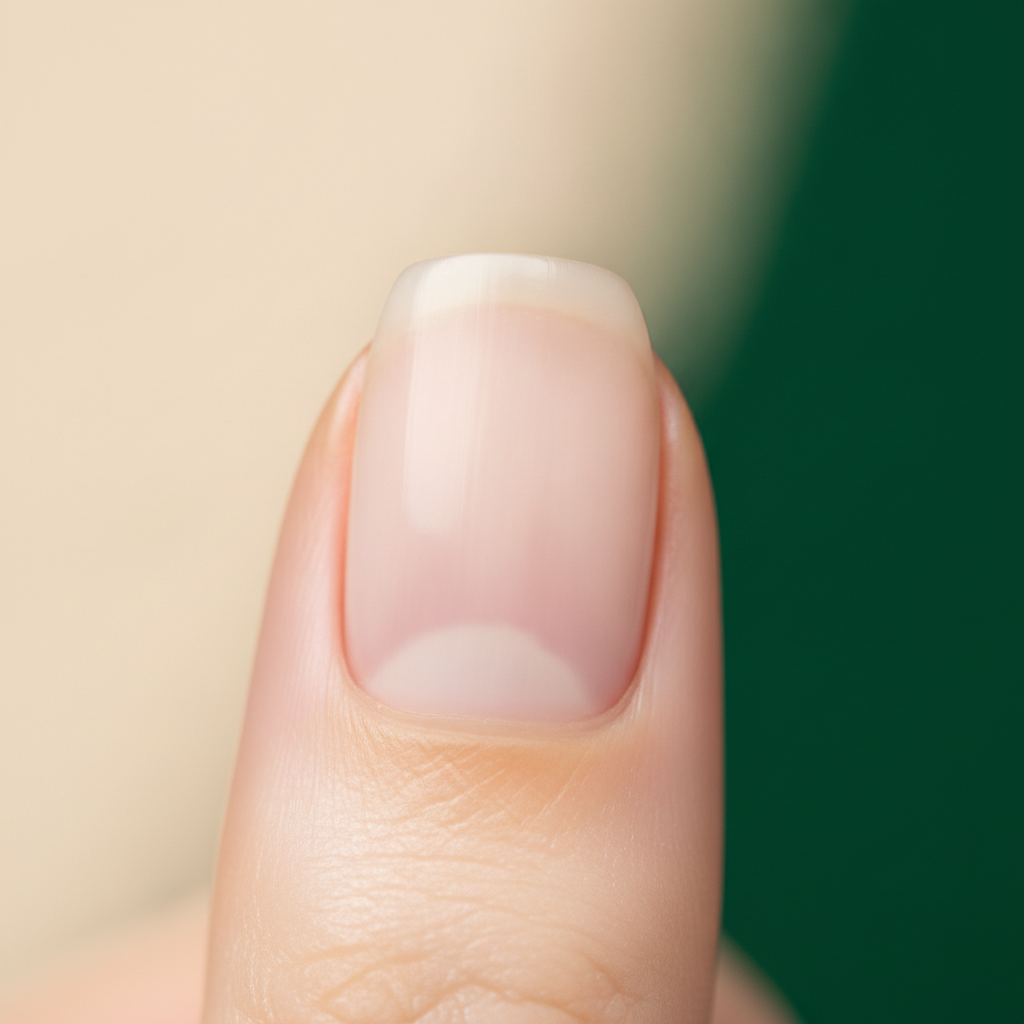
Buff the natural nail with a fine grit to break the surface gloss, then remove all dust. The goal is a uniformly matte plate with no glossy islands. Those shiny patches are sealed keratin, and product will not key into them.
Work the sidewalls and the cuticle zone especially, because that is where your eye tends to skip and where lifting tends to start.
2. Dehydrate
A dehydrator strips surface oil and residual moisture. Natural nails carry more water and oil than we credit, and it changes hour to hour with the client's hydration, the weather, even hand cream applied that morning.
So dehydrate, and do not touch the plate with a bare finger afterward. One fingerprint reintroduces the oil you just removed.
3. pH-Balance With a Bonder
A pH bonder brings the nail closer to a neutral, receptive state and temporarily raises the plate's readiness to hold product. This is the step most techs treat as optional. It is not.
On oily or naturally alkaline nails, a bonder is often the difference between a two-week set and a five-day disappointment.
4. Prime, Matched to the Nail
Primer is where technique meets chemistry. An acid primer etches the plate and creates strong mechanical adhesion, which is useful on stubborn lifters and very oily nails, but it is aggressive and demands a light hand. An acid-free primer works more like a double-sided tape, bonding to the nail and to the enhancement, and it is gentler on thin or compromised plates.
Match the primer to the nail in front of you, not to habit. Thin coat only. Primer is not a base coat, and a thick layer is a soft layer.
The Three Habits That Undo Good Prep
You can run the chain perfectly and still lift if these slip. I check for all three when a student brings me a failed set.
- Product on skin. Enhancement bonds to nail, never to skin. Any product that touches the sidewall or cuticle creates a lifted lip on day one. Leave a hairline margin and keep it clean.
- An uncapped free edge. The free edge is an open door for water and daily wear. Cap it. Wrap product thinly over the edge so there is no seam for lifting to catch. This single habit resolves more chipping complaints than any product switch.
- Oil and moisture creeping back in. The window between dehydrate and application is short. Do not let the client rest a hand on her face, do not reapply hand cream, and do not linger. Reset prep on the second hand if there was a delay.
Reading the Lift to Find the Break
Where a set lifts tells you which link failed. So diagnose the pattern before you blame the powder.
- Lifting at the cuticle points to product on skin or a missed pH step.
- Lifting at the free edge means you did not cap.
- Lifting in the centre or in patches usually means retained shine or oil, which is a cleanse and dehydrate problem.
- Whole-nail release on an otherwise healthy plate points to primer, either the wrong type or too much of it.
Retention Is a Discipline, Not a Product Feature
Reliable retention is a discipline, not a product feature. When your prep chain is honest and repeated the same way on every nail, your system gets to do what it was formulated to do, and your work holds.
Choose safe chemistry to sit under that discipline. Our acrylic systems are MMA-free, and we offer HEMA-free gel options and TPO-free formulations so the chemistry respects the natural nail while you hold the standard at the bench. If you are selling into or buying for the European market, note that the EU prohibited TPO in cosmetic products from 1 September 2025 (Regulation (EU) 2025/877, Annex II).
Frequently asked questions
Why do my nail sets keep lifting?
Lifting is a prep failure far more often than a formula failure. Adhesion is a sequence, not a single step, and skipping, rushing, or contaminating any link shows up around the perimeter first. Run the full chain before you change product.
What is the correct prep chain order?
Four deliberate moves. Cleanse and remove the shine with a fine grit until the plate is uniformly matte with no glossy islands, dehydrate to strip surface oil and moisture, pH-balance with a bonder, then prime with a primer matched to the nail. Thin coat only.
Do I really need a pH bonder?
Yes. A pH bonder brings the nail closer to a neutral, receptive state and temporarily raises the plate's readiness to hold product. On oily or naturally alkaline nails it is often the difference between a two-week set and a five-day disappointment.
Should I use acid or acid-free primer?
Match the primer to the nail in front of you, not to habit. An acid primer etches the plate for strong mechanical adhesion and suits stubborn lifters and very oily nails, but it is aggressive and demands a light hand. An acid-free primer bonds like double-sided tape and is gentler on thin or compromised plates.
What does the location of the lift tell me?
Lifting at the cuticle points to product on skin or a missed pH step. Lifting at the free edge means you did not cap it. Lifting in the centre or in patches usually means retained shine or oil. Whole-nail release on a healthy plate points to primer, either the wrong type or too much of it.
LNC Professional supplies complete, safe-chemistry systems for professional nail technicians. Designed in the Caribbean, built for the world. See the range at lncpronails.com.
Have a question about a system, or want the safety data sheet for a specific product? Message us on WhatsApp at +1 (562) 548-7272. We answer.
Related reading
- Nail Lifting: How to Stop It at the Root
- Nail Prep: The Step That Decides How Long a Set Lasts
- Long-Lasting Nail Sets: How to Make Them Last 4 Weeks
Authoritative sources
- Nail Care Products. US Food and Drug Administration.
- Manicurists and Nail Technicians: workplace exposures. NIOSH, US Centers for Disease Control and Prevention.