Nail File Grits Explained: A Simple Guide by Number
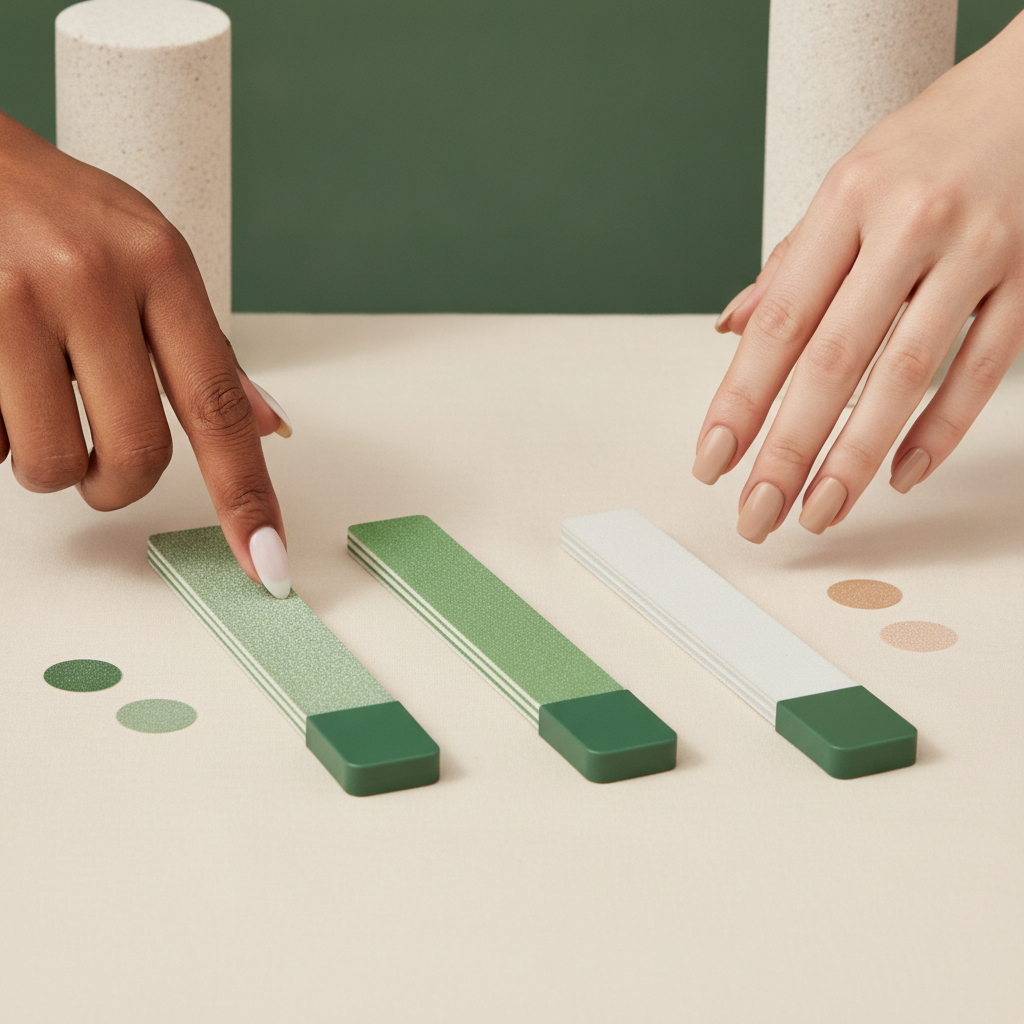
Nail file grits tell you how coarse or fine a file is. Lower numbers shape and shorten, higher numbers finish and smooth. Use 100 to 180 for shaping and 240 and up for finishing.

Summary: Nail file grits tell you how coarse or fine a file is. Lower numbers shape and shorten, higher numbers finish and smooth. Use 100 to 180 for shaping and 240 and up for finishing to protect the natural nail.
Nail file grits are just numbers that tell you how coarse or fine a file is. Yet those numbers matter more than most beginners realize. The wrong grit thins the natural nail fast, and I have repaired the damage often enough to say it plainly. So learning the grit scale is one of the first skills I teach.
Think of grit like sandpaper. A low number means a rough, aggressive file. A high number means a smooth, gentle one. Once you understand the scale, you pick the right file for each step without guessing.
What Nail File Grits Mean
Nail file grits measure how many abrasive particles sit on the file surface. A lower number has larger, rougher particles. A higher number has smaller, finer particles. So a low grit removes material fast, and a high grit smooths gently.
Here is the simple rule I want you to hold onto. Coarse files shape and shorten. Fine files finish and polish. Using a coarse file where a fine one belongs is how techs thin and damage the natural nail.
The abrasiveness scale is your guide to safe filing. So read the number on every file before you touch a nail. Then match it to the job in front of you.
Nail File Grits by Number
Below is the common grit range and what each one does. Keep a small set that covers shaping through finishing.
- 100 grit: Coarse and aggressive. Best for shaping and shortening hard product like acrylic. Use it with care, and keep it off the thin natural nail.
- 150 grit: Medium-coarse. Good for general shaping and refining an enhancement.
- 180 grit: Medium. A versatile grit for shaping edges and blending.
- 240 grit and up: Fine. For finishing, smoothing the surface, and prepping for shine.
Notice the pattern. As the number rises, the file gets gentler. So you move from low to high as you work: shape first, then refine, then finish.
Which Grit for Which Job
Matching the grit to the task keeps your work clean and your clients' nails healthy. Use this quick guide.
- Shaping hard product: 100 to 150 grit. These remove material quickly.
- Refining the shape and edges: 150 to 180 grit. These smooth without heavy removal.
- Finishing and surface work: 240 grit and up. These polish and prep the surface.
- Natural nail work: Fine grit only, with a light touch. Coarse files thin the natural nail fast.
Start every service with the least aggressive grit that will do the job. Then step up only if you need faster removal. This habit protects the nail and gives a cleaner finish, and it is the one I check for first when a student's work looks rough.
Files for the Natural Nail
Natural nails need extra care. The nail plate is thinner and more fragile than hard product. So a coarse file causes damage quickly.
Use fine grits, 240 and up, on the natural nail. Keep a light touch and file in one direction where you can. This reduces splitting and heat. If you are new, starting with medium-to-fine grits is the safest habit while your control develops.
A durable file helps too. A sapphire file, for example, resists splitting and holds a smooth edge longer than a basic emery board. So it stays gentle and consistent over more uses.
Care and Replacement
A file only works well while its grit is intact. Worn or dirty files damage nails and spread contamination.
- Replace files when they lose grit. A dull file drags and generates heat instead of cutting cleanly.
- Sanitize or replace between clients. Follow your local hygiene rules. Some files are single-use; others can be disinfected.
- Store files clean and dry. Moisture and buildup shorten their life.
- Keep a range on hand. Have coarse, medium, and fine files ready so you never reach for the wrong grit.
Grit choice is one part of a complete system. Pair the right files with safe-chemistry products, a matched lamp, and trained technique. So your shaping stays safe, and your finishes look clean every time.
Frequently asked questions
What nail file grit should I use on natural nails?
Use a fine grit, 240 and up, with a light touch on natural nails. Coarse files thin the fragile nail plate fast. So keep the aggressive grits for hard product only.
What does the grit number on a nail file mean?
The grit number tells you how coarse or fine the file is. A lower number is coarser and removes material faster. A higher number is finer and smooths gently. Move from low to high as you work.
Which grit is best for shaping acrylic?
Use 100 to 150 grit to shape and shorten acrylic, since these remove hard product quickly. Then refine with 180 grit and finish with 240 and up. Match the grit to each step.
How often should I replace nail files?
Replace files once they lose grit or get contaminated. A dull file drags and creates heat instead of cutting cleanly. Also sanitize or replace between clients per your local hygiene rules.
Is one file grit enough for a beginner?
No. Keep a small range that covers shaping through finishing, roughly 100 to 240 grit. Starting with medium-to-fine grits protects the natural nail while your control develops.
LNC Professional supplies professional tools and complete safe-chemistry systems for professional nail technicians. Designed in the Caribbean, built for the world. See the range at lncpronails.com.
Have a question about a system, or want the safety data sheet for a specific product? Message us on WhatsApp at +1 (562) 548-7272. We answer.
Related reading
- Beginner Nail Tech Tools: The Starter Kit Checklist
- Nail Drill RPM: A Speed Guide for Every Service
- Nail Prep: The Step That Decides How Long a Set Lasts
Authoritative sources
- Manicurists and Nail Technicians: workplace exposures. NIOSH, US Centers for Disease Control and Prevention.
- Nail Salon Worker Safety. US Occupational Safety and Health Administration.