LED Nail Lamp: How to Match It to Your Gel
An LED nail lamp must match your gel to cure it fully. Under-curing weakens the set and raises reaction risk. Use a lamp tuned to your gel's photoinitiators and respect the cure time.

Summary: An LED nail lamp must match your gel to cure it fully. Under-curing weakens the set and raises reaction risk. Use a lamp tuned to your gel's photoinitiators, respect the cure time, and cap the free edge.
An LED nail lamp cures gel by triggering its photoinitiators with light. But not every lamp cures every gel. When the lamp and gel do not match, the product cures poorly. So matching the two is one of the most important habits in gel work, and it is the first thing I ask about when a tech tells me her sets are lifting.
Many techs assume any lamp will do. However, a mismatch leaves soft gel inside a hard shell. That weakens the set and raises the risk of skin reactions. So treat lamp and gel as a matched pair, not two separate buys.
Why an LED Nail Lamp Must Match Your Gel
An LED nail lamp cures gel only when its light matches the gel's photoinitiators. Photoinitiators are the ingredients that start the cure when light hits them. Each gel is tuned to a certain light output. So the lamp must deliver the light that gel needs.
When the match is right, the gel cures fully and evenly. When it is wrong, the surface may feel hard while the layer underneath stays soft. That under-cure is where most gel problems begin, and I have traced more service failures to it than to any single product fault.
- Weak retention: Soft gel inside a set does not hold. So you get lifting and early breaks.
- Higher reaction risk: Uncured product against skin raises the chance of sensitivity over time.
- Poor shine and strength: An under-cured layer never reaches its full strength or finish.
So a matched lamp is not a luxury. It is what makes your gel perform as designed.
How to Choose the Right Lamp
Picking a compatible lamp is simpler than it sounds. Start with the gel range you use, then find a lamp tuned for it.
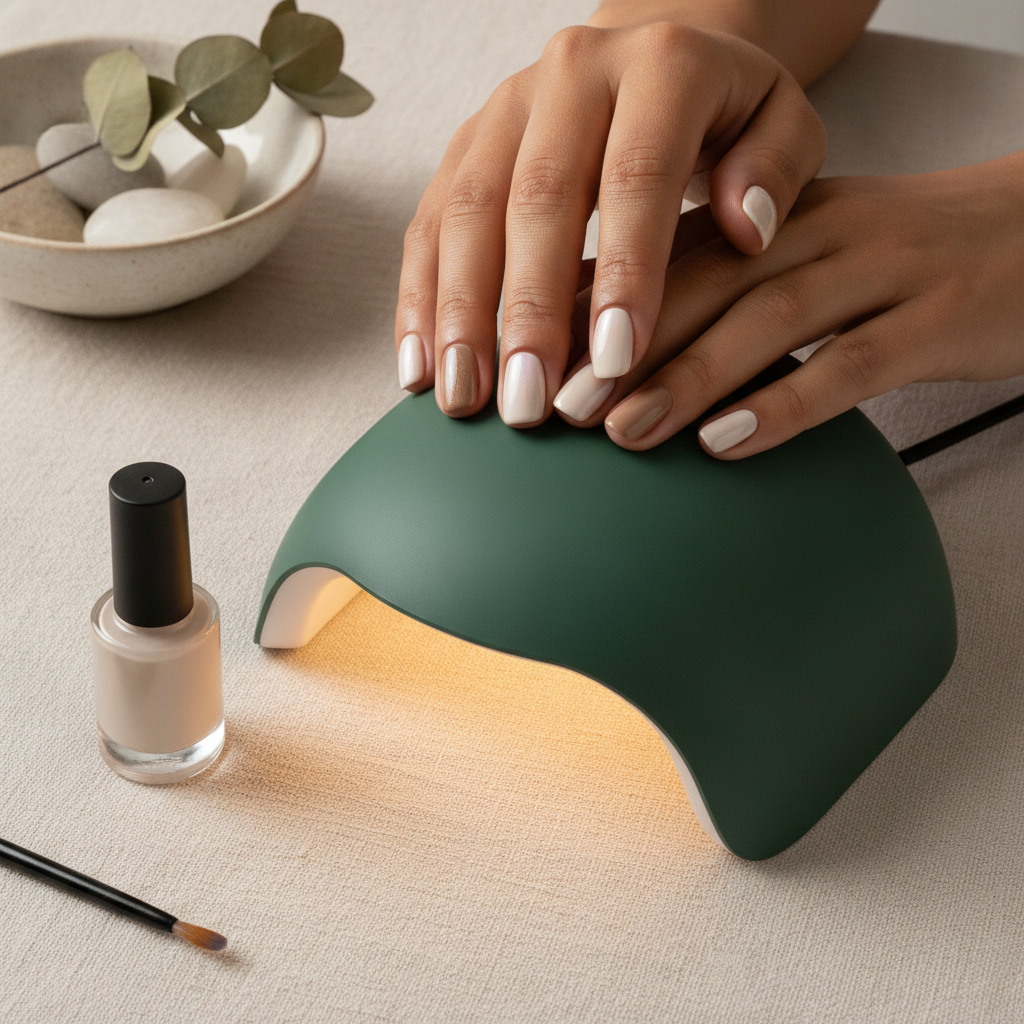
A useful flash-cure LED lamp runs 18 watts, with preset 30-second and 60-second timers. Look for these features:
- Preset timers. 30 and 60-second settings match common cure times, so you do not guess.
- A cordless design. Up to 10 hours per charge frees you from the wall and suits mobile work.
- A 360-degree adjustable neck. This lets you position the light over any hand for even coverage.
- Compatibility with your gel range. The lamp should cure your builder gels, gel polishes, and soft gel tips fully.
Match the lamp to the gel first, then enjoy the convenience features. Because coverage and cure come before comfort.
Respect the Cure Time
Even the right lamp fails if you rush the cure. Curing is a timed step, not a quick pass. So follow the cure time for each gel and each layer. Do not push through because you are running late.
- Thin your layers. Thick layers do not cure through. Build in thin coats and cure each one.
- Use the full timer. Do not cut a 60-second cure to 30. The extra seconds finish the layer.
- Cure the free edge. Cap and cure the tip so it seals cleanly. This stops chips and lifting.
- Position the hand well. Use the adjustable neck so light reaches every nail evenly.
Warm, humid air can change how gel behaves and flows. Working in the Caribbean, I plan for that. So work in thin, controlled coats and let the lamp do its job. A steady process beats a rushed one every time.
Compatibility With Soft Gel Tips and More
A good LED lamp should cure more than one product type. That keeps your kit simple and your results consistent.
Look for a lamp that cures your full LED gel range, including builder gels and gel polishes. It should also cure pre-formed soft gel tips, which reduce sculpting time and give consistent shapes. When one lamp covers your whole gel menu, you avoid mismatches between services.
Still, always confirm the match. If you add a new gel to your kit, check that your lamp cures it fully. A quick test on a tip tells you before a client's set is at risk, and that small habit has saved my students a great deal of rework.
Care and Everyday Use
A lamp lasts longer and cures better with a little care.
- Keep the interior clean. Wipe away gel drips and dust so the light stays strong.
- Charge and store it properly. For a cordless unit, keep the battery healthy with regular charging.
- Check your cures. If gel feels tacky or soft after curing, review your lamp match, layer thickness, and timer.
- Replace when output fades. A lamp that no longer cures fully needs attention.
Your lamp is one part of a complete system. Pair it with a matched gel, safe-chemistry products, and trained technique. So your gel sets cure fully, hold for weeks, and look clean every time.
Frequently asked questions
Can I use any LED lamp with any gel?
No. The lamp must match the gel's photoinitiators to cure it fully. A mismatch leaves soft gel inside a hard shell, which weakens the set and raises reaction risk. Use a lamp tuned to your gel range.
What happens if my gel is under-cured?
Under-curing leaves soft product inside the set. So you get weak retention, lifting, early breaks, and a higher chance of skin sensitivity. Match the lamp, thin your layers, and use the full cure time.
How many watts should an LED nail lamp be?
A useful flash-cure LED lamp runs 18 watts with 30 and 60-second timers. Wattage is only part of the picture, though. Full compatibility with your gel range and even coverage matter just as much.
Will one LED lamp cure builder gel, gel polish, and soft gel tips?
A good lamp tuned to your range should cure all three fully. Still, confirm the match whenever you add a new product, and test on a tip before using it on a client.
How do I cure gel evenly on every nail?
Use a lamp with an adjustable neck so light reaches every nail, build thin layers, and cap the free edge. Then run the full timer for each layer. Even coverage plus full time gives a complete cure.
LNC Professional supplies professional tools and complete safe-chemistry systems for professional nail technicians. Designed in the Caribbean, built for the world. See the range at lncpronails.com.
Have a question about a system, or want the safety data sheet for a specific product? Message us on WhatsApp at +1 (562) 548-7272. We answer.
Related reading
- Curing Gel Nails Properly: Lamp, Time, and Common Mistakes
- Builder Gel: What It Is and When to Use It
- HEMA-Free Hard Gel: Why It Matters and When to Use It
Authoritative sources
- Nail Care Products. US Food and Drug Administration.
- TPO in Nail Products: Questions and Answers. European Commission.