Removal Without Damage: Soak, Do Not Pry
Product comes off by dissolving or softening, never by force. Identify the system, break the top seal, soak with gentle heat, re-soak anything stubborn, th...

Summary: Product comes off by dissolving or softening, never by force. Identify the system, break the top seal, soak with gentle heat, re-soak anything stubborn, then hydrate to close. If you feel resistance under the tool, the natural nail is paying for it.
Safe removal means the product is dissolved or softened off, never forced off. That is the whole rule, and it holds under every system I have ever taught. So if you are feeling resistance under the tool, stop, because the natural nail is paying for that resistance.
I want you to hear why this matters commercially, not just technically. The fastest way to lose a client is not a lifted set. It is the moment she looks down at thin, tender nails after a removal and decides the service costs her more than it gives her. Removal is where reputations are made, and it is the step most of us are tempted to rush.
Read the System Before You Reach for Anything
Removal starts with knowing what is on the nail. A soak-off gel polish, a rubber base, a BIAB or builder gel structure, a hard gel, and an acrylic system all behave differently. So identify first, then choose your method.
- Soak-off gel polish and many rubber bases. These break down in acetone once the surface is opened.
- Hard gel and some builder gels. These are engineered not to soak off. They come down by careful reduction with a file or e-file, then a fresh surface, not by soaking and prying.
- Acrylic and dip systems. These respond to acetone, but they need real soak time and warmth to soften fully.
If you cannot identify the system, treat it as the more stubborn of the two and reduce mechanically before you ever test a soak. I have seen techs guess wrong and then pry, and that is how you strip layers you cannot give back.
The Soak, Done Properly
Whatever the system, the sequence is the same. Break the seal, apply solvent, add gentle heat, and wait. I teach it in that order every time, so nothing gets skipped when the day is full.
Break the Top Seal
Take the shine off the top layer with a file so acetone can reach the product. You are opening a door, not thinning the nail. So stop at the colour or the top of the structure, and no further.
Hold the Acetone Against the Plate
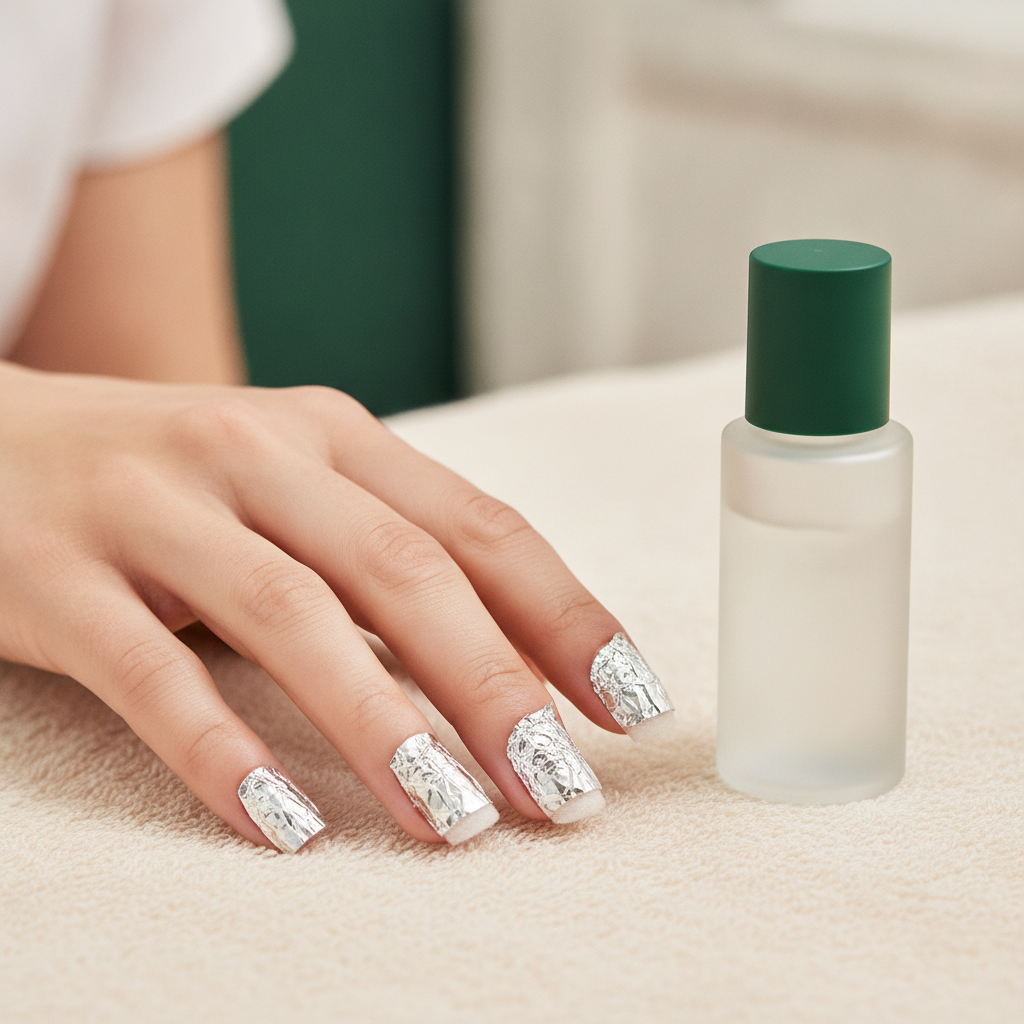
Saturated cotton and foil is the classic method and it is still a good one. A gel steamer or a warmed soak bowl works too. The point is contact and warmth. Acetone works faster around body temperature, so a warm towel over the foils earns you time.
Wait, Then Check, Then Wait Again
Give it ten minutes before the first check. When the product is ready it will look lifted, gummy, and dull, and it will move with a gentle push from a wooden or metal pusher held almost flat to the nail. If it drags or flakes in hard chips, it is not done. So re-wrap and give it more time.
Here is the tell that separates a technician who protects nails from one who does not. It is what you do when the product half-releases. The disciplined answer is always to re-soak. Never chase a stubborn edge with the pusher.
Hydration Is Part of the Service, Not the Extra
Acetone is doing its job by dissolving oils, so it dries the plate and the surrounding skin. That is not a flaw to apologise for. It is a step to close out properly, and I want you to build it into the service rather than treat it as a courtesy.
- Cuticle oil worked into the folds and the plate, then a minute to absorb.
- A richer balm or cream over the top to seal it in.
- An honest word to your client about oiling at home between sets. Hydrated nails flex instead of splitting, and they hold your next set better.
Send her home understanding that the oil is not a treat. It is maintenance that protects the work she is paying for. A tech who teaches that is a tech she keeps rebooking.
Removal Is Duty of Care Made Visible
I have spent more than twenty years teaching that the natural nail is the client, and the enhancement is only ever a guest on it. Patience over prying is not a slower way to work. It is the difference between a client who trusts your hands and one who quietly moves on.
Safe chemistry on the way in, gentle removal on the way out, hydration to close. That is the whole loop, and it is the standard I hold my students to.
Frequently asked questions
Why should I never pry off nail enhancements?
Because product comes off by dissolving or softening, never by force. If you feel resistance under the tool, that resistance is being absorbed by the natural nail plate, and you strip layers you cannot give back.
How do I know which removal method a set needs?
Identify the system first. Soak-off gel polish and many rubber bases break down in acetone. Hard gel and some builder gels are engineered not to soak off and must be reduced with a file or e-file. Acrylic and dip respond to acetone but need real soak time and warmth. If you cannot identify it, treat it as the more stubborn of the two and reduce mechanically.
How long should I soak before checking?
Give it ten minutes before the first check. When the product is ready it looks lifted, gummy, and dull, and it moves with a gentle push from a pusher held almost flat to the nail. If it drags or flakes in hard chips, re-wrap and give it more time.
Does warmth really speed up acetone removal?
Yes. Acetone works faster around body temperature, so a warm towel over the foils, a gel steamer, or a warmed soak bowl earns you time. The point is contact and warmth held against the plate.
What should I do after removal?
Hydrate, and treat it as part of the service. Work cuticle oil into the folds and the plate, give it a minute to absorb, then seal it with a richer balm or cream. Tell your client to oil at home between sets, because hydrated nails flex instead of splitting and they hold the next set better.
LNC Professional supplies complete, safe-chemistry systems for professional nail technicians. Designed in the Caribbean, built for the world. See the range at lncpronails.com.
Have a question about a system, or want the safety data sheet for a specific product? Message us on WhatsApp at +1 (562) 548-7272. We answer.
Related reading
- Nail Prep: The Step That Decides How Long a Set Lasts
- Nail Lifting: How to Stop It at the Root
- How to Choose a Professional Nail Drill
Authoritative sources
- Nail Care Products. US Food and Drug Administration.
- Manicurists and Nail Technicians: workplace exposures. NIOSH, US Centers for Disease Control and Prevention.