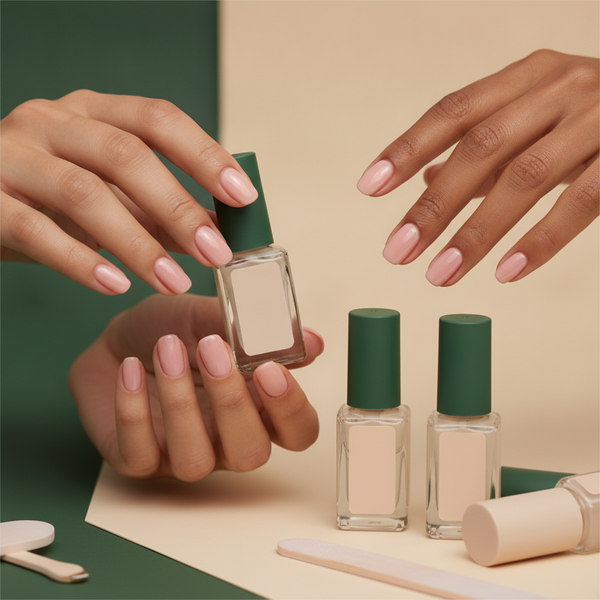
HEMA-Free Gel: The Safer Choice for Sensitive Clients
HEMA-free gel lowers the risk of nail allergies for reactive clients. HEMA is a common trigger. So reach for a HEMA-free builder gel or acrylic liquid, keep product off the skin, and cure fully.

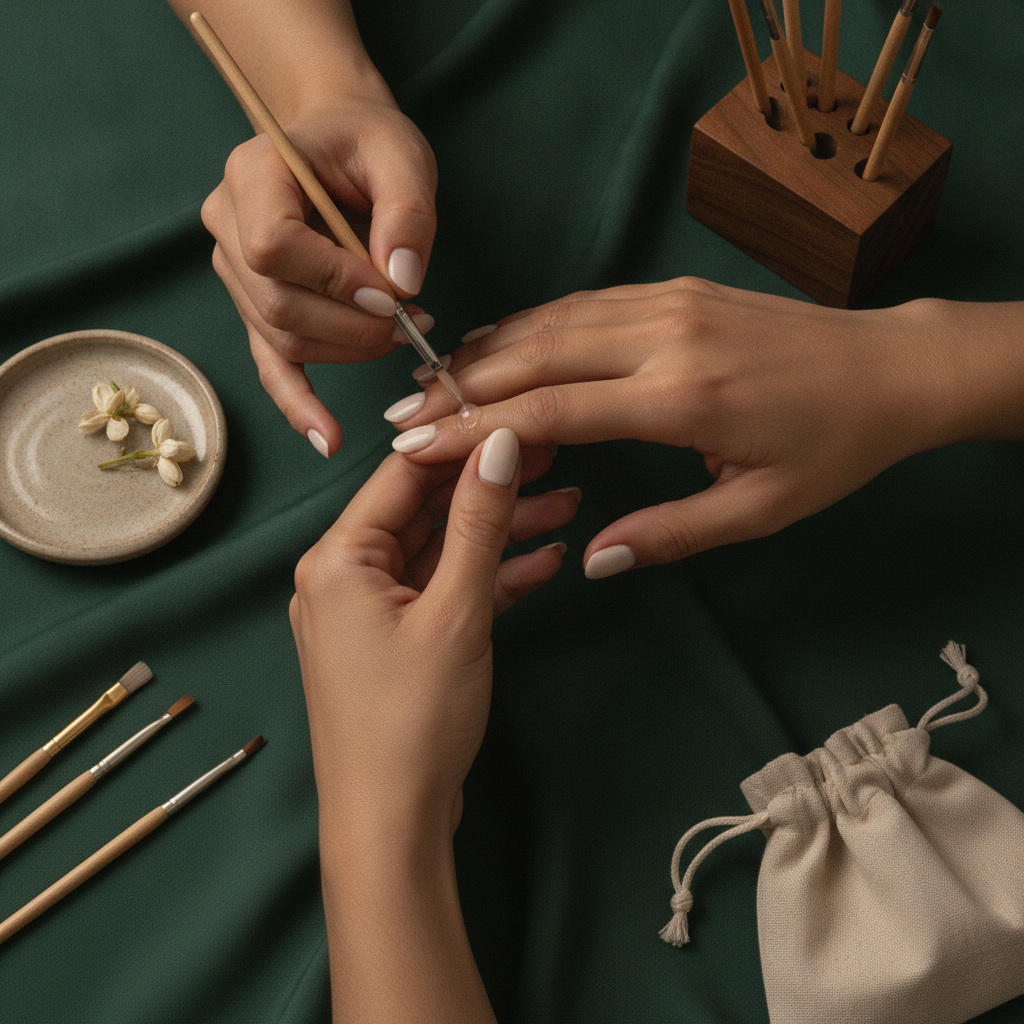
Summary: HEMA-free gel lowers the risk of nail allergies for reactive clients. HEMA is a common trigger. So reach for a HEMA-free builder gel or acrylic liquid, keep product off the skin, and cure fully.
HEMA-free gel is what I reach for with any client who reacts to standard gels. HEMA is a small, common ingredient in many gel products. It is also one of the most common causes of nail-enhancement allergies. So when a client comes back itchy, red, or irritated after her appointments, HEMA is often the reason.
I have watched many technicians meet this problem and not know what they were looking at. But the fix is straightforward. Switch to a low-risk formula, and change how you apply it. Then most reactions ease.
Why HEMA-Free Gel Protects Sensitive Clients
HEMA-free gel removes one of the biggest known triggers from your service. HEMA is a tiny molecule. Because it is so small, it can pass through the skin barrier and cause sensitization with repeated contact. Over time, that contact can turn into a lasting allergy.
Once a client is sensitized to HEMA, the reaction usually stays for life. I want you to sit with that for a second, because it changes how you think about your table. Prevention matters far more than treatment. A HEMA-free builder gel and a HEMA-free acrylic liquid take that main trigger out of the equation. Therefore they are the products to reach for with any reactive client.
An allergy-safe gel does not have to mean weaker results. A quality HEMA-free hard gel still self-levels, cures to a high shine, and holds up for overlays and sculpting. So you protect the client and keep the finish you want.
Signs a Client May React to HEMA
Read the client's history before you start. I ask questions before I ever open a bottle, and a few answers tell me to slow down.
- Itching or redness around the cuticles after past gel services.
- Small blisters or peeling skin on the fingertips or the sides of the nail.
- Lifting or a burning feeling during curing, which can signal skin contact with uncured gel.
- A history of reactions to other brands or to gel polish at home.
If you see these, do not push through. I mean that plainly. Move the client to a HEMA-free system and tighten your application. Then watch how the next set behaves.
How to Apply Low-Risk Gel Safely
The product is only half the safety story. Application is the other half, and it is the half I spend most of my teaching on. Most reactions come from repeated skin contact and under-curing, not the gel alone. So careful hands matter as much as a clean formula.
- Keep gel off the skin. Stay off the cuticle and sidewalls. Wipe any contact away at once.
- Cure fully, every layer. Under-cured gel against the skin is a leading trigger. Match the lamp to the gel.
- Use thin, even coats. Thick layers cure poorly in the center and leave uncured product behind.
- Standardize your prep. Clean prep means better bonding, so you do not need to flood the nail.
A HEMA-free carving gel and colour gel round out the range for detailed work, so you can keep the whole service low-risk. Then a sensitive client gets art and colour without the reaction.
When to Refer a Client to a Professional
Some reactions need more than a product swap, and you must know where your job ends. If a client has already had a strong reaction, that is a medical matter. So advise her to see a dermatologist and consider patch testing before a full set. Send the exact product names with her.
A 2023 clinical review in Contact Dermatitis put HEMA contact allergy at 1.5% to 3.7% of patch-tested patients in Europe, and above 3% in the United States and Canada (de Groot AC, Rustemeyer T. 2-Hydroxyethyl methacrylate (HEMA): a clinical review of contact allergy and allergic contact dermatitis, Part 1. Contact Dermatitis. 2023;89(6):401-433. doi:10.1111/cod.14405). That is not a huge share, but it is real and the reported rate has been rising. So a HEMA-free option in your kit serves that group well and protects everyone else too.
Safer chemistry is where the industry is heading. Techs who offer a HEMA-free path stand out as professionals who protect their clients. So stock the option, apply with care, and let word travel. In my experience, careful work is the best marketing you have.
Frequently asked questions
What is HEMA and why does it cause allergies?
HEMA is a small acrylate molecule in many gels. Because it is so small, it can pass through the skin and cause sensitization with repeated contact. Over time, that can become a lasting allergy.
Is HEMA-free gel as strong as regular gel?
Yes. A quality HEMA-free hard gel still self-levels, cures to a high shine, and holds up for overlays and sculpting. So you remove the main trigger with no real loss in performance.
Can a HEMA allergy go away?
Usually not. Once a client is sensitized to HEMA, the reaction tends to stay for life. So prevention with a HEMA-free system matters far more than trying to treat it later.
Does HEMA-free mean fully allergy-proof?
No. HEMA-free removes the biggest single trigger, but other acrylates can still react in some people. So keep product off the skin, cure every layer fully, and refer strong reactions to a dermatologist.
Which clients should always get a HEMA-free service?
Anyone with past itching, redness, blisters, or peeling after gel appointments. Also anyone who has reacted to other brands or home gel polish. For these clients, a HEMA-free system is the safe default.
LNC Professional supplies complete, safe-chemistry systems for professional nail technicians. Designed in the Caribbean, built for the world. See the range at lncpronails.com.
Have a question about a system, or want the safety data sheet for a specific product? Message us on WhatsApp at +1 (562) 548-7272. We answer.
Related reading
- Gel Nail Allergy: Causes, Signs, and How to Prevent It
- MMA-Free Nail Products: Why They Matter for Every Tech
- Safe Nail Products: How to Tell If Yours Really Are
Authoritative sources
- HEMA: a clinical review of contact allergy, Part 1 (de Groot & Rustemeyer, 2023). Contact Dermatitis, via PubMed.
- Nail Care Products. US Food and Drug Administration.
- CosIng: EU cosmetic ingredient database. European Commission.